

Keyword research is the backbone of every successful SEO strategy. It helps you understand what your audience searches for, identify content opportunities, and create pages that attract qualified traffic. Without the right keywords, even well-written content can struggle to rank in search results.
This is where semrush keyword research makes a difference. Semrush gives you access to keyword data, competitor insights, search intent, and topic clustering tools that help you build a smarter SEO strategy. Instead of relying on guesswork, you can make decisions based on real search data.
Whether you’re a beginner, blogger, marketer, or business owner, this semrush keyword research guide explains how to use Semrush for keyword research step by step.
In this blog, you’ll learn how to use Semrush for keyword research to discover valuable keywords, organize your content strategy, and improve your chances of ranking higher on Google.
Step 1: Create Your Semrush Account and Set Up Your Project
Create a Semrush account, verify your email, and add your website as a new project.
This setup lets Semrush monitor your website, track keyword rankings, and compare your performance with competitors. Once your dashboard is ready, you can access all the keyword research tools from the left-hand menu.
Step 2: Open the Keyword Magic Tool and Enter a Seed Keyword
The Keyword Magic Tool is the starting point for semrush keyword research. Open the tool and enter a broad seed keyword related to your niche.
 For example, if you run a digital marketing agency, enter Digital marketing.
Semrush generates keyword ideas along with key metrics such as:
- Search volume
- Keyword Difficulty (KD%)
- Search intent
- Cost per Click (CPC)
- Competitive density
- SERP features
Review the suggestions and shortlist keywords that align with your content goals.
Step 3: Refine Keyword Ideas with Match Types
Semrush organizes keyword suggestions into different match types, making it easier to narrow your list.
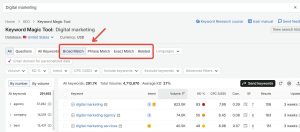
- Broad Match: Shows a wide range of related keywords.
- Phrase Match: Displays keywords containing your exact phrase.
- Exact Match: Focuses on keywords closely matching your search term.
- Related Keywords: Reveals additional topic ideas and semantic keywords.
Explore each match type to build a comprehensive keyword list.
Step 4: Filter Keywords by Keyword Difficulty
Search volume alone isn’t enough. You also need to evaluate how difficult it is to rank for a keyword.
Use the Keyword Difficulty (KD%) filter to find keywords that match your website’s authority.
| KD Score | Competition Level | Best For |
| 0 to 29 | Very Easy | New websites |
| 30 to 49 | Easy | Growing websites |
| 50 to 69 | Moderate | Established websites |
| 70+ | High | High-authority websites |
If your website is new, prioritize keywords with a KD below 49 to improve your chances of ranking.
Step 5: Find Long-Tail Keywords with the Questions Filter
The Questions filter helps you discover long-tail keywords based on real user queries.
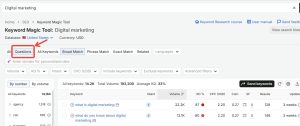
You may find searches like:
- What is keyword research?
- How to perform keyword research?
- Which keyword research tool is best?
- How does Semrush keyword research work?
Question-based keywords usually have lower competition and help you create content that answers specific user queries.
Step 6: Validate Every Keyword with Keyword Overview
Before adding a keyword to your content plan, review it in Keyword Overview.
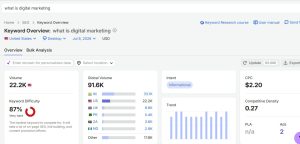
Check important metrics such as:
- Monthly search volume
- Keyword Difficulty
- Search intent
- Search trends
- Cost per Click (CPC)
- SERP analysis
- Top-ranking pages
This data helps you prioritize keywords with the best balance of traffic potential and ranking opportunities.
Next, organize your keywords, analyze competitors, and build topic clusters to create a stronger SEO strategy.
Step 7: Analyze Keywords for Your Target Location
Search trends differ across countries, regions, and cities. Semrush lets you view location-specific keyword data so you can target the right audience and create more relevant content.
Open Keyword Overview or Keyword Magic Tool, select Location, and choose your target market to view local search metrics.
This helps you:
- Discover local keyword opportunities
- Understand regional search trends
- Improve local SEO
- Build location-focused content
Step 8: Find Competitor Keywords with Organic Research
Competitor analysis helps you uncover keywords that already drive organic traffic.
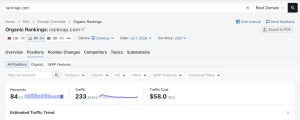
Open Organic Research, enter a competitor’s domain, and select the Positions report. Review their ranking keywords, search volume, keyword difficulty, search intent, and estimated traffic.
Focus on keywords where competitors rank well, but your website doesn’t. These often become your best content opportunities.
Step 9: Refine Your Keyword List with Advanced Filters
Large keyword lists often include irrelevant terms. Advanced filters help you narrow the results and focus on keywords that match your SEO goals.
Filter keywords using:
- Search volume
- Keyword Difficulty
- Search intent
- CPC
- Include or exclude terms
- Word count
A refined keyword list is easier to manage and more effective for content planning.
Step 10: Save Your Keywords in Semrush Keyword Strategy Builder
After selecting your target keywords, save them in the semrush keyword strategy builder. This tool keeps your keyword research organized and simplifies content planning.

You can use it to:
- Save keyword lists
- Group keywords by topic
- Build content plans
- Create keyword clusters
- Review keyword metrics
A fast and reliable hosting platform like ZNetLive can further support your SEO efforts by improving website speed, uptime, and overall user experience.
Step 11: Compare Websites with the Keyword Gap Tool
The Keyword Gap tool compares your website with up to four competitors to uncover keyword opportunities you may have missed.

Focus on the Missing and Untapped reports. These keywords already perform well for competitors and can help you expand your organic visibility.
Step 12: Build Topic Clusters
Topical authority plays a key role in modern SEO. The semrush keyword strategy builder groups related keywords into clusters, helping you create a stronger content structure.
Each cluster typically includes:
- Pillar page
- Supporting articles
- Related keywords
- Search metrics
- SERP competitors
This structure improves internal linking and helps search engines understand your expertise.
Step 13: Research PPC Keywords with Advertising Research
Semrush also supports PPC research. Open Advertising Research to analyze competitors’ paid keywords, ad copy, landing pages, CPC, and competition level.
These insights help you identify high-converting keywords and improve your advertising campaigns.
Step 14: Track Keyword Performance with Position Tracking
Keyword research doesn’t end after publishing. Monitor your target keywords with Position Tracking to measure SEO performance over time.
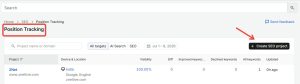
Track metrics such as:
- Daily rankings
- Visibility score
- Ranking changes
- Competitor performance
- SERP features
Regular monitoring helps you identify opportunities to update and improve your content.
Successful semrush keyword research goes beyond finding high-volume keywords. A structured approach helps you identify the right opportunities, organize your content, and build a strategy that delivers consistent SEO results. Now, let’s recap the key takeaways.
Final Thoughts
Semrush keyword research is not just about discovering high-volume keywords; it is about uncovering relevant opportunities that drive results. A successful strategy requires understanding search intent, evaluating keyword difficulty, analyzing competitors, organizing keyword clusters, and tracking performance consistently.
This semrush keyword research guide provides a practical workflow that takes you from keyword discovery to content planning with confidence. Each Semrush tool contributes to a smarter SEO strategy that helps you identify opportunities and create content your audience is actively searching for.
Start with the Keyword Magic Tool, validate every keyword through Keyword Overview, uncover new opportunities with Organic Research and Keyword Gap, organize your ideas inside the semrush keyword strategy builder, and monitor your rankings with Position Tracking.
These steps will help you build a stronger content strategy, improve your search visibility, and achieve sustainable organic growth.
